
What is it: edge finishing machines (overlockers)
Nowadays, you can find plenty of information about overlock machines online, in brochures, and in magazines. However, such articles are rarely written by technicians or professionals with hands-on experience in servicing and maintaining these machines.
The goal of this short article is to define the key criteria that we believe are especially important when choosing a specific model. We offer our recommendations and suggestions based on many years of sales experience and feedback from our customers.
General Features of Overlock Machines
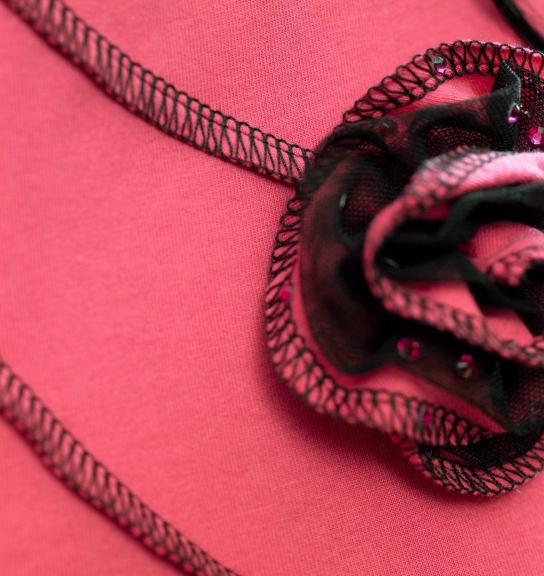
First of all, we want to dispel the widespread belief that a sewing machine and an overlocker are the same thing. The main function of an overlocker is to trim the excess, tangled edge of the fabric and overcast the cut area. This is done with several threads that wrap around the fabric edge, forming a protective stitch that prevents fraying. Overlockers are also used to join garment pieces (for example, underarm seams). So, an overlocker simultaneously trims excess fabric, joins pieces, and overcasts the edge. Additionally, some overlockers are combined with flatlock machines—these are called combo machines. They perform not only overcasting but also flat seams, chain stitches, and decorative stitches needed for hemming, edging, and other operations.
Overlockers do not replace sewing machines—they complement them by enabling operations that sewing machines cannot perform due to their construction.
The greatest advantage of these machines is the elasticity of the seams. That’s why they are indispensable when sewing knitwear. Modern overlockers can process garments with 5 (combo only), 4, 3, or 2 threads, and perform wide or narrow overcast seams. Special presser feet can help with tasks such as ruffling or sewing on elastic bands.
All overlockers have a differential feed system. It helps prevent fabric puckering when sewing stretchy materials and makes it easier to achieve flawless seams.
These machines are easy to adjust: you can easily set the required thread tension, stitch density, cutting position, presser foot pressure, and other settings. Everything is thoughtfully designed for the modern user, so don’t be afraid to experiment and strive for perfect seams.
All modern overlockers use standard household sewing needles and work well with synthetic threads. For best results, invest in slightly higher-quality threads. This will not only produce a better-quality product but also make the sewing process smoother. You can also use colored, silk, and textured threads to make your creations individual and unique.
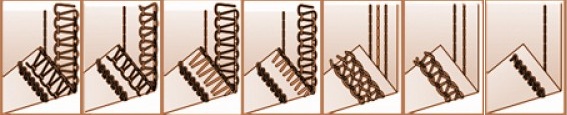
Stitches:

About Overlock Manufacturers
Now that you have a general understanding of overlock machines and their capabilities, let’s look at the main manufacturers and the machines they offer.
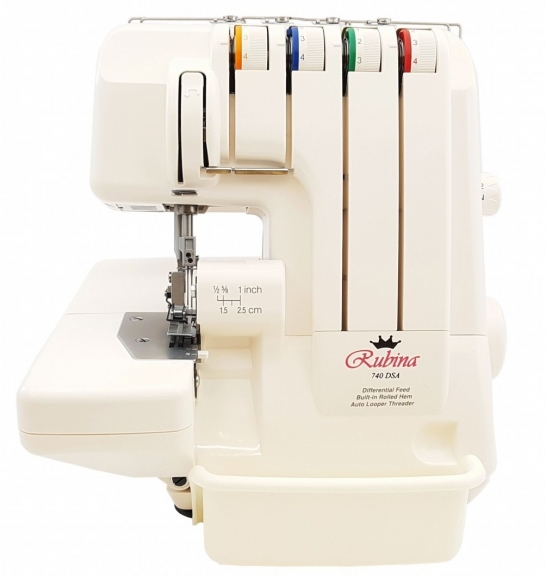
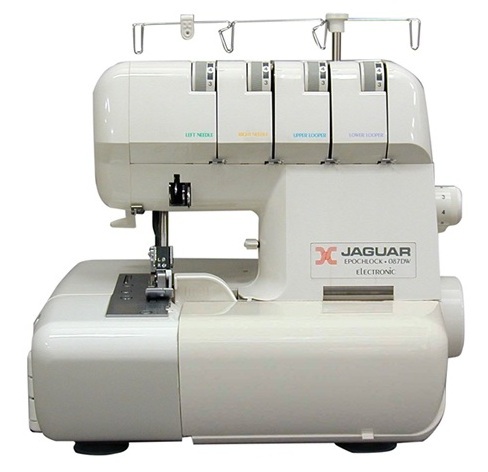
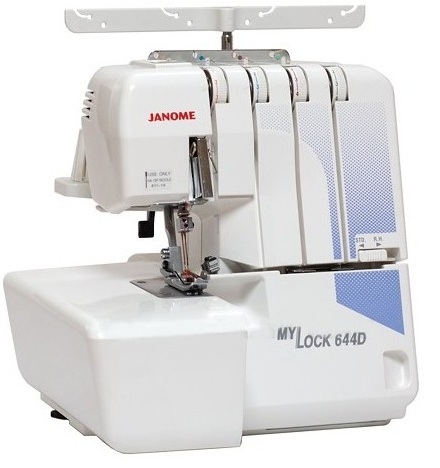
Rubina, Jaguar, and Janome
Today, Rubina, Jaguar, and Janome offer a wide range of overlock machines on the market. These companies are well-known globally in the field of overlock manufacturing. Their machines provide an optimal balance between price and quality. They perform all standard overlock stitches and are perfectly suited for home sewing. If you’re planning to use an overlocker for household needs, we recommend choosing one from these brands—you won’t go wrong.
 |
 |
 |
BERNINA
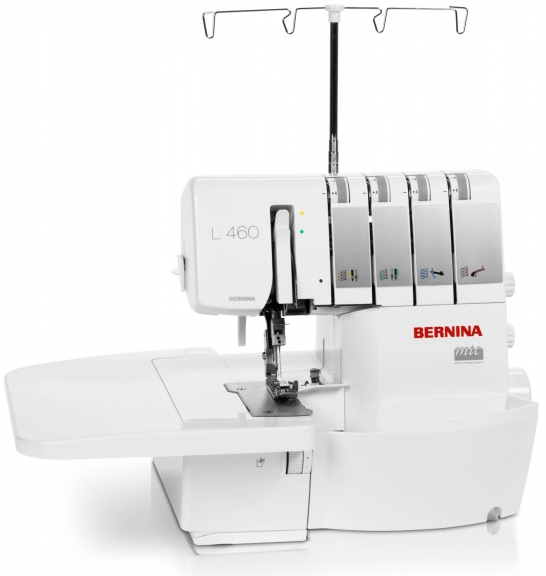
Customers who value impeccable quality and easy operation often choose the high-end manufacturer BERNINA (Switzerland).
This brand’s overlockers feature exceptionally precise thread tension control. The fabric trimming knife design is improved—the blade has a separate guide moving from top to bottom. This setup ensures significantly longer blade life and high-quality fabric trimming, especially when sewing knits and very loose materials. These advantages make the resulting seams indistinguishable from professional ones found on store-bought garments.
All BERNINA overlocker models operate very quietly. They handle both extremely thin fabrics and thick ones (e.g., denim) with ease.
 |
Types of Overlockers
Household 4- and 3-thread Overlockers
Most commonly, the fabric edge is overcast with 4 threads (2 needle threads and 2 lower looper threads) or 3 threads (1 needle thread and 2 lower looper threads). Some models offer the option to switch to a 2-thread overcasting mode, such as the BERNINA L450 or RUBINA 880D. This is done using a special accessory (looper converter). What is it? It’s a small metal hook placed on the unthreaded upper (right) looper. Why is it needed? This looper with the converter acts as an intermediary between the lower looper thread and the needle thread. In other words, it picks up the lower looper thread and passes it to the needle, resulting in a 2-thread overcast.
All modern models from any manufacturer can perform a very similar range of overlock stitches. They also all include the same functions: presser foot pressure adjustment, knife disengagement, differential fabric feed, knife position adjustment, narrow seam conversion, and stitch density control. So, as you can see, the main difference between overlockers lies not in functionality, but in assembly and component quality.
Household 5-Thread Overlockers (Combo Machines)
If you want a machine that overcasts the fabric edge and simultaneously stitches a chain seam beside it, only 5-thread combo machines can do that—combining both overlock and flatlock functions. These machines can perform not only standard overlock operations but also complex knit seams. Flatlock functions are especially useful for hemming and edging.
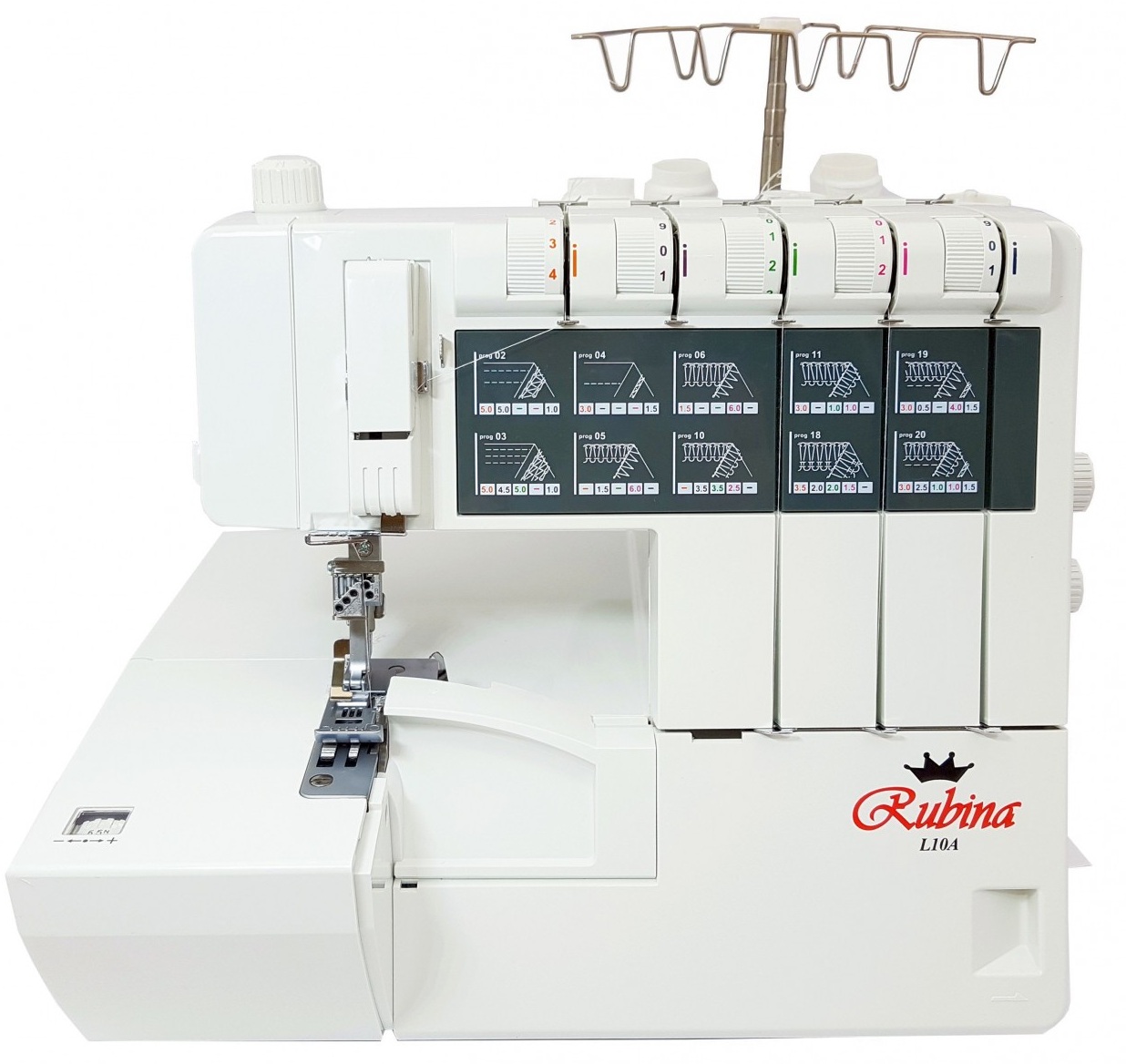
Household 5-thread combo machines (e.g., MERRYLOCK 3560CL, RUBINA L10A, JUKI MO-735) perform all possible overlock and flatlock stitches. Due to their more complex construction and broader capabilities, these machines are more expensive than standard overlockers.
A combo machine performs not only regular overlock stitches but also flatlock stitches and 5-thread stitches.
|
|
 |

It’s also worth considering the option of having two separate machines—this is a slightly more expensive but much more convenient solution. With a dedicated overlocker and a separate flatlock machine, you don’t need to worry about switching between functions. However, in this case, you lose the 5-thread operation, as both overlockers and flatlock machines typically use only 4 threads.
We hope this article was helpful to you. More detailed information about each model can be found on its product page. You’ll find all our available overlockers and combo machines in our catalog here.