
Quilting and Machines for It
History of Quilting
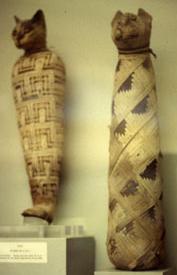
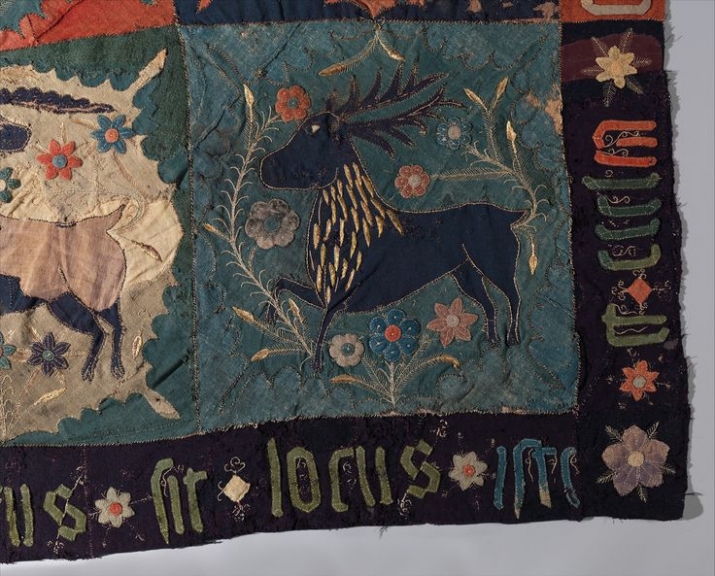
Quilting holds a special place among well-known crafts such as knitting, embroidery, and macramé. Quilts, in one form or another, have existed in nearly every culture. Fragments have been found dating back to ancient Egypt and China. Even the familiar ivory figurines of Egyptian pharaohs depict them wearing quilted cloaks. It is believed that quilting arrived in Europe in the 11th century from Palestine, brought back by Christian soldiers returning from the Crusades. These included flags, ceremonial garments, tents, and coverings. During the Middle Ages, quilting was popular across Europe and was not limited to the lower classes. Mary Stuart, Queen of Scotland, while imprisoned, not only knitted and embroidered but also sewed quilted bedspreads.
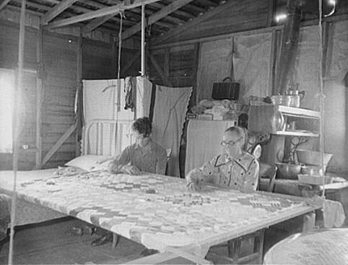
Today, quilting is highly popular worldwide. Various household and decorative items, garments, and textile artworks are sewn from fabric scraps. In Lithuania, there are currently hundreds of quilting artists, including many professional textile artists. The Utena quilting club “Vorė” actively participates in exhibitions.
 |
 |
 |
Quilting Techniques
There are several quilting techniques:
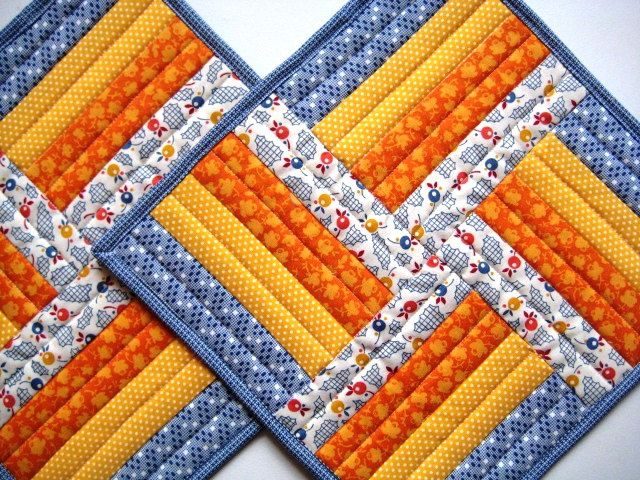
- Patchwork – a quilting method where small pieces of fabric in different colors and patterns are sewn together to form an ornamental, usually geometric, composition.
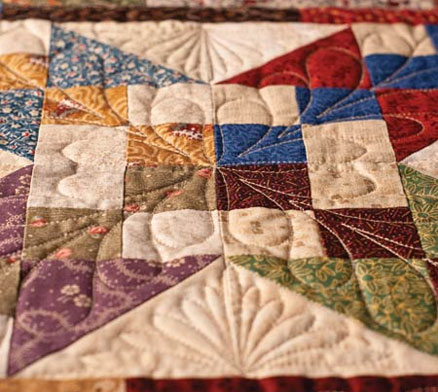
- Quilting – combines various crafting and decorative techniques: patchwork, appliqué, embroidery, and the use of decorative stitches and seams.
 |
 |
Quilt-Making Process
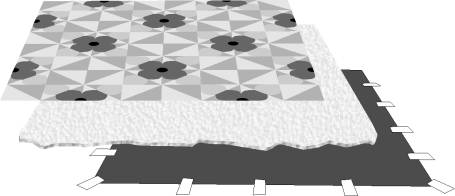
A quilt is a handmade textile item (such as a wall hanging, bedspread, toy, garment, etc.) created from fabric scraps. It is a true textile artwork that requires great patience and precision. The item is sewn by hand, with a sewing machine, or using a combined method, and consists of three layers:
- The top layer (decorative) is made from fabric pieces arranged by color or shape to form geometric or other ornamental designs.
- The middle layer contains batting, which gives the quilt volume and softness.
- The bottom layer is the backing, usually made of cotton fabric.
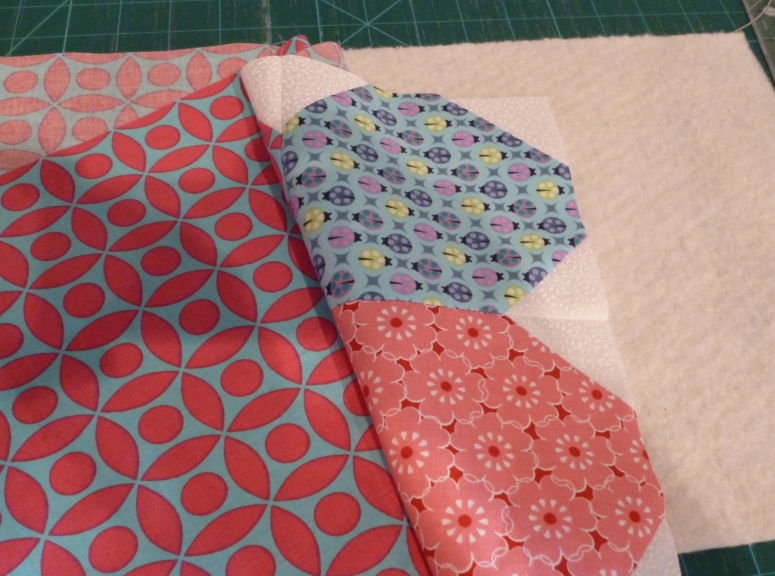
All three layers are stitched together with fine quilting stitches that follow the pattern lines or create new, additional motifs. After quilting, the piece becomes three-dimensional.
 |
 |
Required Materials
Today, millions of hobbyists and professionals around the world create quilts. Quilters form clubs, organize exhibitions, collaborate on group quilts, learn from one another, travel abroad, and more. A specialized industry has developed to support them, producing the necessary tools, devices, and sewing equipment. Today, specialized stores offer a wide range of tools for quilting.
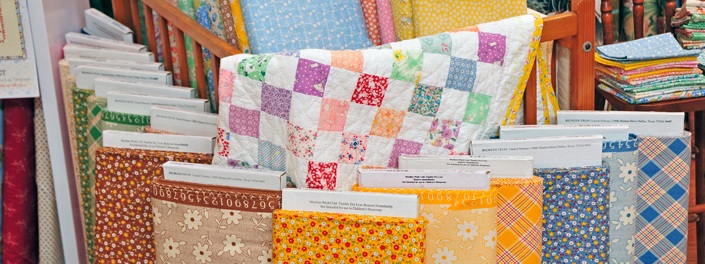
By using high-quality materials and equipment, you can create beautiful and precise pieces. Use the best tools and you’ll always be satisfied with your results. When planning your quilt, choose fabrics with a consistent texture. Quilting works best with 100% cotton. Cotton fabrics are less prone to distortion, iron well, and last longer than other materials. Blended fabrics (mostly cotton with some synthetics) are more durable and wash better.
Essential quilting tools include: a fabric cutting mat, ruler, rotary cutter, tailor’s chalk, pencil, thimble, pins, needles, threads, fabrics, as well as sewing and ironing equipment.
Sewing Machines for Quilting
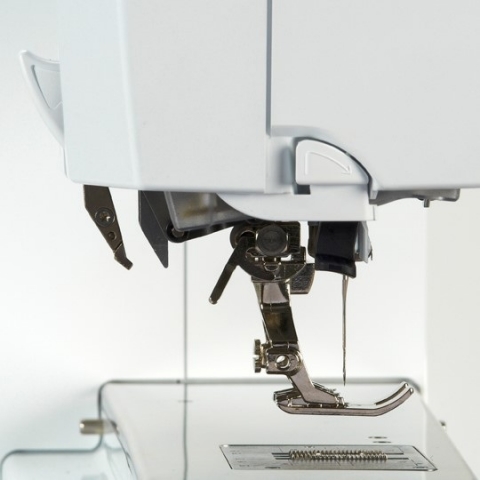
Choosing a sewing machine for quilting deserves special attention. Essentially, it is a standard sewing machine that looks no different from others on the outside. However, if the machine is designed for quilting, it includes additional features that ensure maximum comfort during quilting. For example, a knee-operated presser foot lifter, increased presser foot lift height (up to 14 mm), a wide selection of decorative stitches, and upper fabric feed (additional feed dogs).
 |
 |
 |
European Sewing Machine Manufacturer BERNINA (Switzerland)
BERNINA pays special attention to the art of quilting. BERNINA sewing machines are known for their high reliability, original design, and wide variety of decorative stitches and seams. These top-quality machines are continuously modernized and feature a unique construction unmatched by any other manufacturer. Various components and mechanisms are patented: the hook system with a central bobbin, solid metal presser feet, and the BSR laser foot designed specifically for quilting.
About BSR
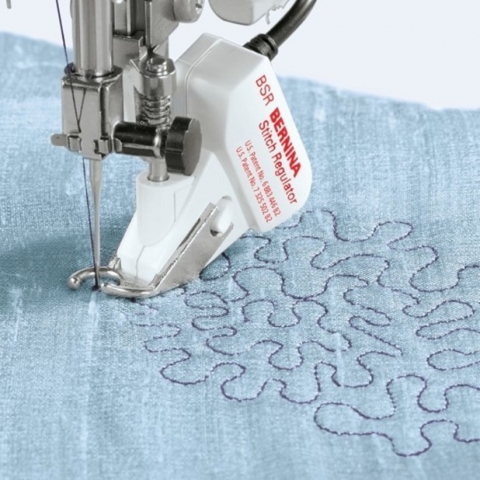
For this series of sewing machines, BERNINA engineers developed the BSR (Bernina Stitch Regulator) foot—an automatic stitch length regulator. This is a stunning global innovation with no equivalent.
The BSR foot automatically ensures consistent stitch length even when the fabric movement speed changes or when stitching curved lines. Equipped with three interchangeable soles, it guarantees uniform stitch length and alerts the user if the fabric is being pushed too fast. Creating beautifully quilted patterns is now accessible to everyone.
BERNINA 720 Sewing and Embroidery Machine
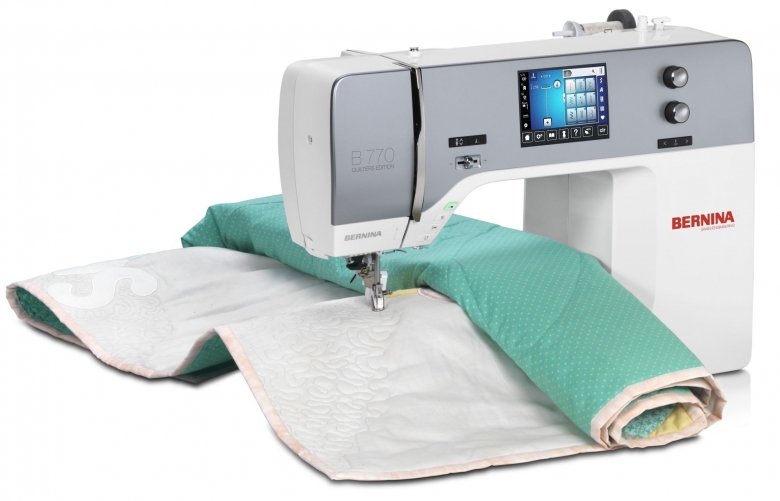
The BERNINA 720 model features a threader, a liquid crystal display, built-in memory, direct control functions, needle positioning, and an extended sewing table to enlarge the working area. These machines include a knee-operated presser foot lifter, allowing you to raise the foot and lower the feed dogs with a single press, while guiding the fabric freely with your hands. Lowering the feed dogs protects the fabric and makes it easier to position very thick materials under the foot. These machines are compatible with the specialized BSR laser quilting foot.
 |
BERNINA 740, 770QE, 790, 880 Sewing and Embroidery Machines
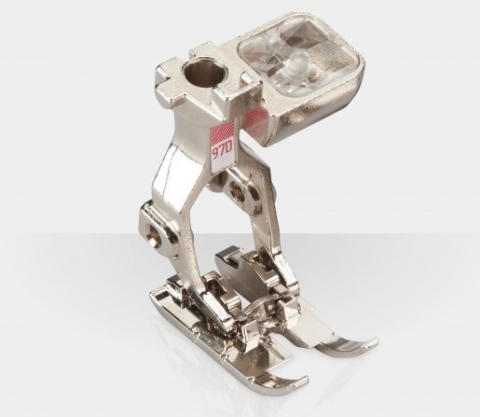
These BERNINA machines feature a thoughtfully extended arm platform. With decorative stitches up to 9 mm wide, you can beautifully embellish your creations. The option to connect an extra-large embroidery module allows for stitching large designs and motifs. All BERNINA 7 and 8 series models offer full control over stitch parameters. With a single touch, you can easily adjust stitch length, width, and needle position. These machines support the BSR (Bernina Stitch Regulator), which greatly simplifies free-motion quilting. The BSR foot automatically ensures consistent stitch length even when fabric movement speed varies. The special 97D quilting foot includes an adjustable guide, which is indispensable for joining individual quilt pieces. The Dual Feed system guarantees smooth feeding of even the most challenging fabrics.
BERNINA Q16 and Q16plus Quilting Machines
For quilting enthusiasts seeking top-quality stitching results, the BERNINA Q16 and Q16plus longarm quilting machines are an excellent choice. These professional machines are designed specifically for free-motion quilting, ensuring maximum precision and comfort. The extended platform provides ample space for large quilts, while the integrated BSR (Bernina Stitch Regulator) maintains consistent stitch length even when fabric movement speed changes. These machines feature robust construction, high stitching speed, and intuitive controls, making them ideal for both hobbyists and professionals creating exceptional textile artworks.
 |
 |
 |
We invite you to step into the enchanting world of quilting and discover new creative possibilities by crafting unique works of textile art.
We hope this article was helpful to you. Detailed information about each discussed model can be found on its product page. You’ll find all our available sewing machines in our catalog here.