
About Sewing Supplies
The sewing process of any product can be divided into five stages: measuring, cutting the fabric, marking the pieces, joining the parts with sewing threads, and ironing. Each stage involves various tools and instruments that help ensure good product quality and facilitate the execution of operations.
Needles
Straight needles are used for hand stitching, and their main parts are: the eye, the shaft, and the point. Needles intended for embroidery or darning have a larger eye than sewing needles, and their point is rounded.
A sewing machine needle performs several stitching functions simultaneously, so the quality of the needle greatly affects the quality of the seams. When choosing the right sewing machine needle, it is important to select the correct thickness and the most suitable point shape (sharpening).
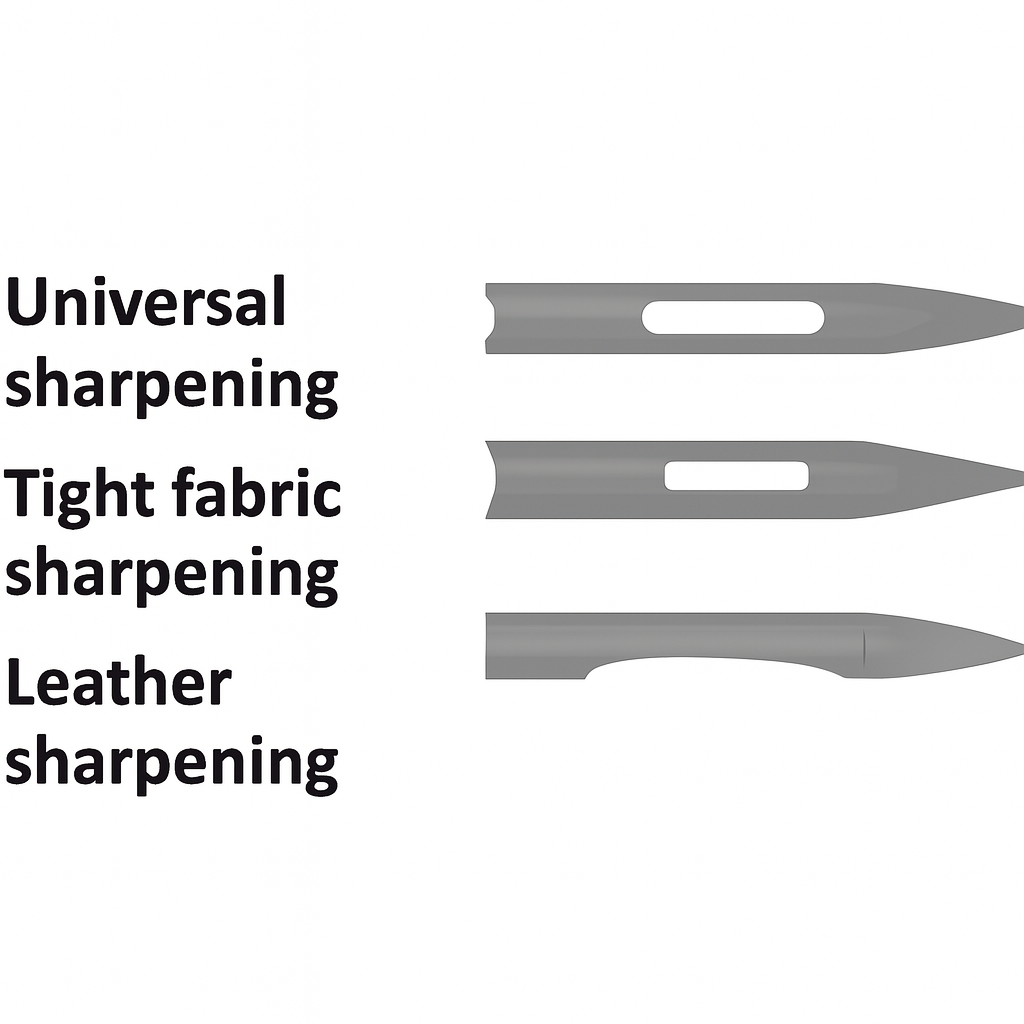
- Textiles: For sewing textile fabrics, needles with a standard conical point are most commonly used. These are standard, maximally sharp needles.
- Knits: Knitted fabrics should not be sewn with regular-point needles, as they can easily damage the loops. Therefore, needles with rounded points (ball point) are used for knits. The rounded tip pushes the yarn aside without damaging it.
- Leather, fur, and similar materials: Needles for these materials have cutting-edge points in the shape of blades, diamonds, triangles, or other forms. These are known as chisel-point needles. Such points reduce resistance when piercing thick materials. This is especially important in industrial use, as the needles heat up less and do not scorch the product.
|
|
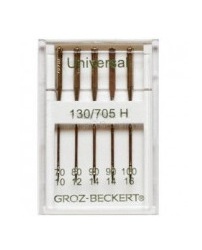 |
The standard needle system suitable for domestic sewing machines is 130/705H. These needles feature a flat shank (one side is ground flat), which ensures precise positioning and secure fixation in the needle holder. Below are the markings used for needles in this system.
| Needle System | Explanation |
|---|---|
| 130/705 H | Universal needle, suitable for most fabrics |
| 130/705 H-E | For embroidery, with a larger eye |
| 130/705 H-J | For denim |
| 130/705 H-S | For stretchy, elastic fabrics like jersey |
| 130/705 H ZWI | Twin needles |
| 130/705 H ZWI H-S | Twin needles for stretchy fabrics |
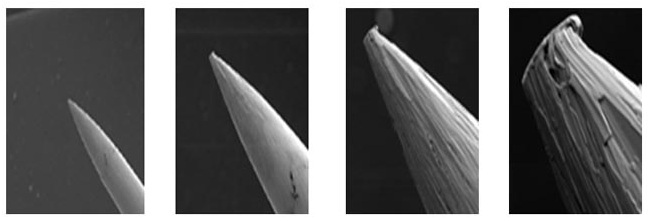
The needle tip must always be in excellent condition, as a blunt or bent tip can cause tears, disrupt proper machine operation, and severely damage the fabric.
Pins
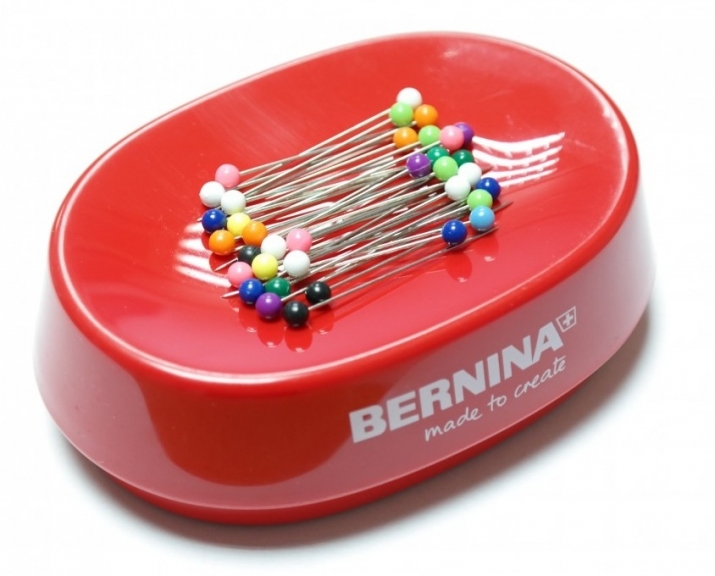
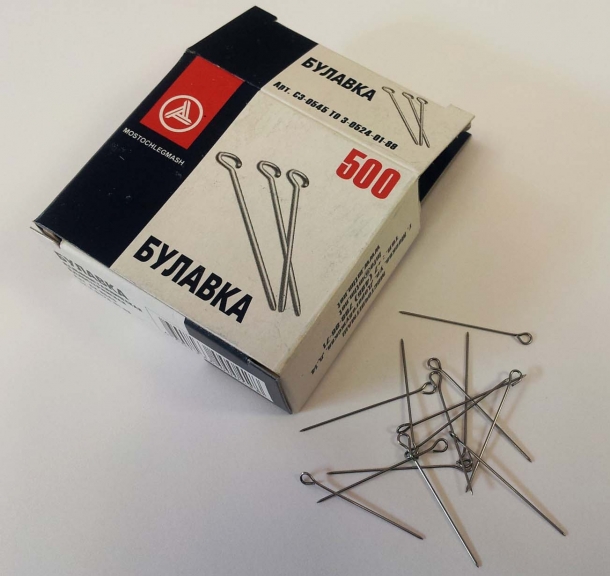
Pins of various lengths are used in sewing, depending on the operation and fabric type. Straight nickel-plated pins are suitable for most sewing tasks. When working with thicker, stiffer materials, longer pins are more convenient. Pins with colored heads are easier to see on fabric, but when working with lighter, more delicate materials, thinner pins with sharper tips should be used to avoid damaging the fabric. For knit fabrics, use pins with rounded tips (ball point), which gently push the fibers aside without piercing them.
 |
 |
Thimble
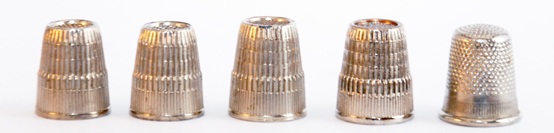
A thimble is designed to protect the finger from needle pricks when pushing the needle through fabric. It should be chosen according to the size of the middle finger. The thimble must fit securely and not slip off the finger.
Needle Threader
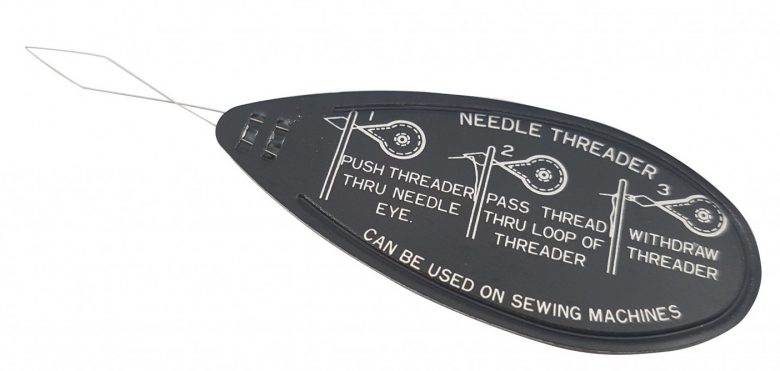
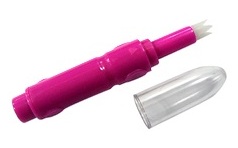
This tool allows you to quickly and easily thread a needle. Modern sewing machines often come with built-in threaders, but for older machines and hand sewing, the following types are perfectly suitable:
| Threading tool (classic type) | Threading tool |
 |
 |
Fabric Cutting Scissors
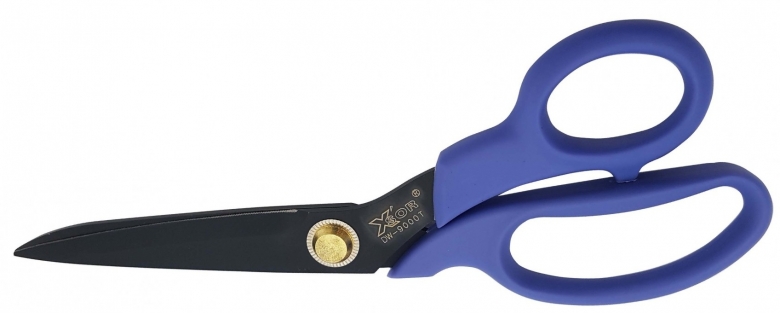
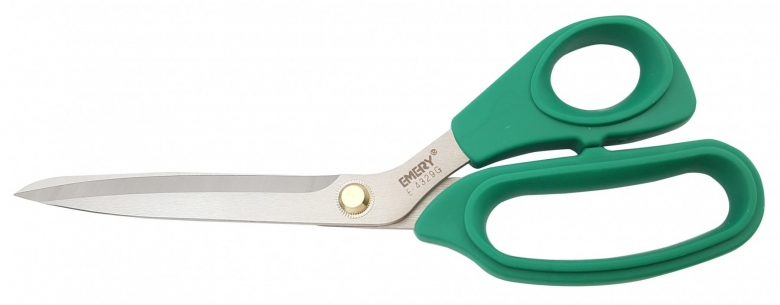
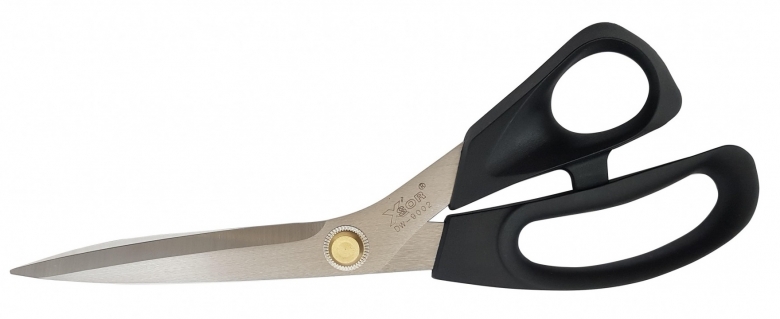
Scissors must be of the highest quality, made from stainless steel. Their shape and length can vary significantly, but the most important factor is a comfortable handle. Some scissors have identical handle holes, while others feature one larger handle designed for multiple fingers. The best scissors are made from premium steel and have blades joined by a screw, allowing adjustment of blade tension and overall looseness.
Well-sharpened and polished scissors ensure smooth cutting lines, while dull blades can easily damage the fabric. Do not use fabric cutting scissors for paper or other household materials—this severely damages the blades. Scissors require proper care: regular cleaning, dry storage, and occasional lubrication of the screw joint.
Scissors with curved handles are especially suitable for cutting fabric. Their blade length typically ranges from 18 to 30 cm. When choosing scissors, pay special attention to comfort. The handle shape should feel natural to you, helping to prevent fatigue during extended cutting sessions. Ergonomic handles made from soft thermoplastic are particularly comfortable. For synthetic and knit fabrics, use scissors with serrated blades, which prevent slipping and ensure precise cutting.
 |
 |
 |
Zigzag Scissors
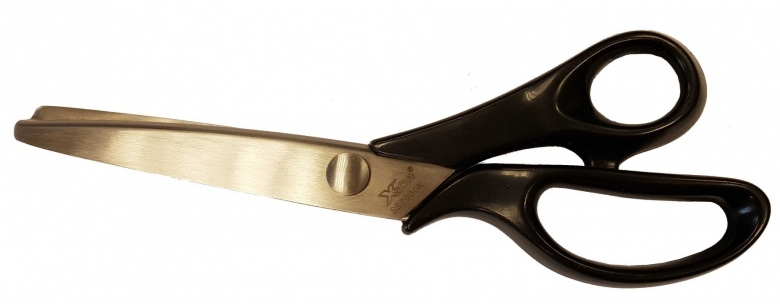
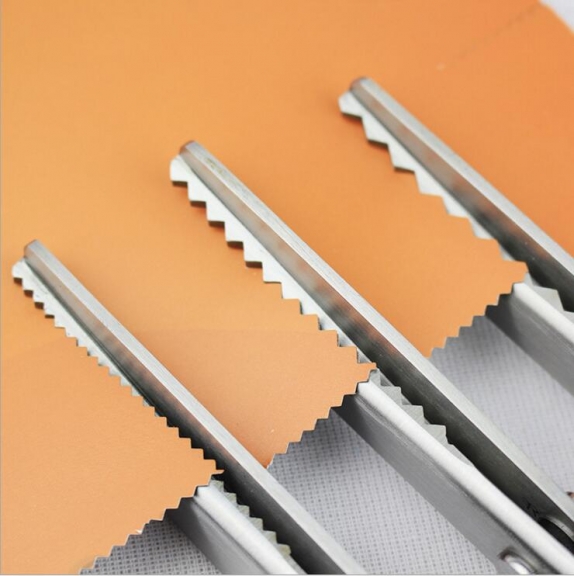
Zigzag scissors are designed for finishing the edges and seams of fabric and other materials (e.g., felt, upholstery, paper), as well as for cutting lining fabric. When cutting with these scissors, a zigzag edge is formed, which helps prevent the fabric from fraying.
 |
 |
Small Scissors
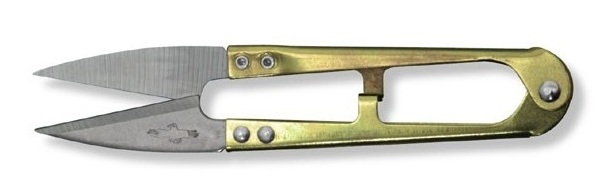
Scissors with blade lengths of approximately 5–8 cm are used for various small trimming tasks. They are especially convenient for cutting thread ends during sewing. Choose scissors with blades attached to the handles using screws—these are easier to sharpen.
Seam Ripper
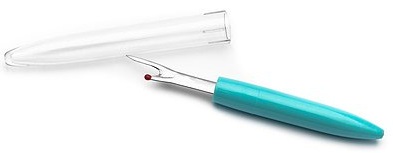
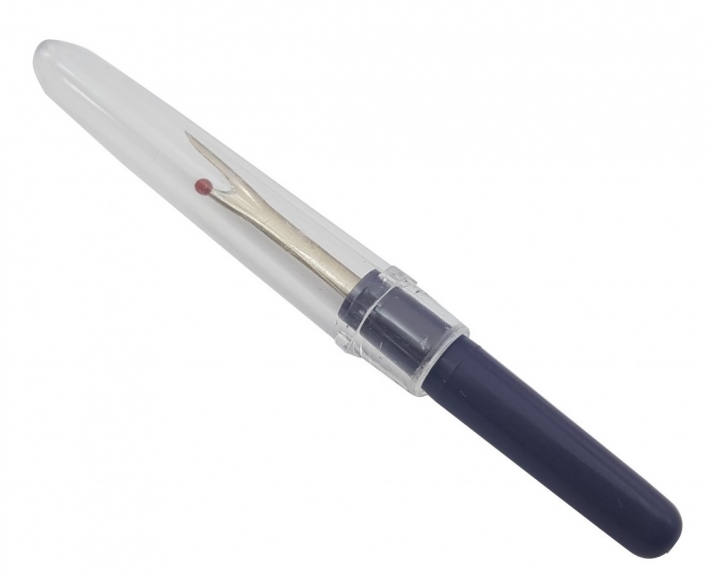
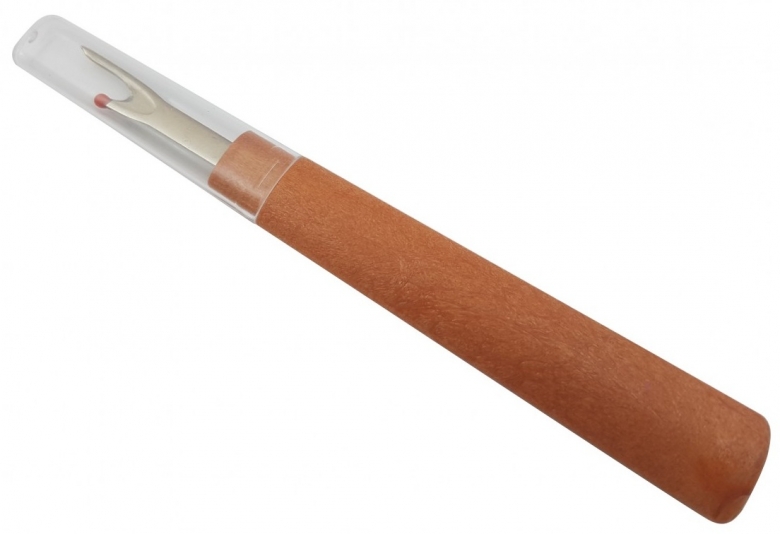
A seam ripper is used for undoing seams and cutting buttonholes. However, it must be used with great care, as it can easily damage the fabric. When cutting buttonholes, it’s best to use pins to protect the ends of the slit. Seam rippers come in various sizes and sharpness levels—choose one that feels comfortable to hold and has a tip sharpness that suits your needs.
 |
 |
 |
Rotary Cutter
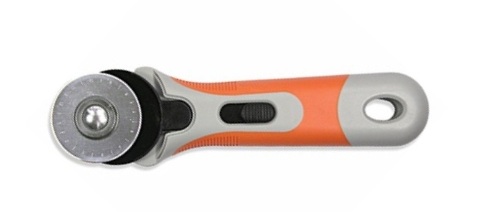
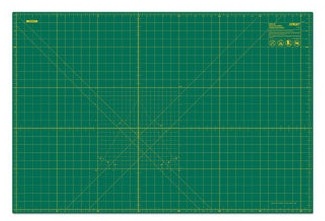
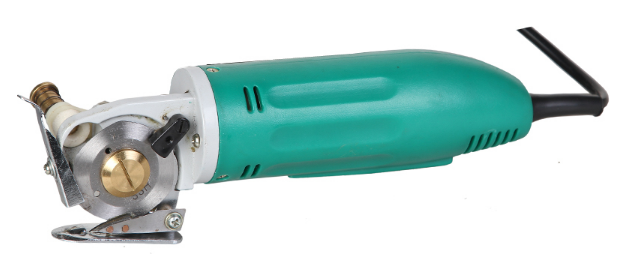
A rotary cutter is designed for cutting various materials, including fabric, paper, and leather. It is especially suitable for patchwork sewing. Use a special plastic cutting mat to protect your table surface. If you plan to regularly cut larger quantities of material, it is recommended to use an electric cutting knife. This knife has a motor and operates on the principle of scissors (with two blades that cut), so a protective mat is not needed when using it.
 |
 |
 |
Measuring Tools
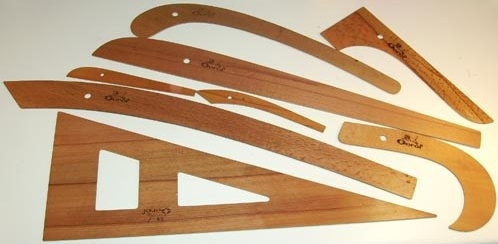
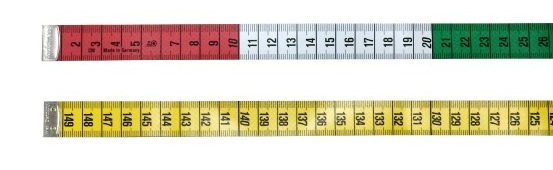
Measuring tools are essential for taking various measurements and making markings. A wide wooden or metal ruler (approximately 90 cm long) is used for measuring and marking large pattern pieces and determining the fabric’s grainline. A standard ruler (30–45 cm long) is used for general measurements. A flexible plastic measuring tape (about 150 cm long) is ideal for taking body measurements. A transparent T-shaped ruler helps determine the fabric’s weave direction, adjust patterns, and draw 90-degree angles.
 |
|
Marking Tools
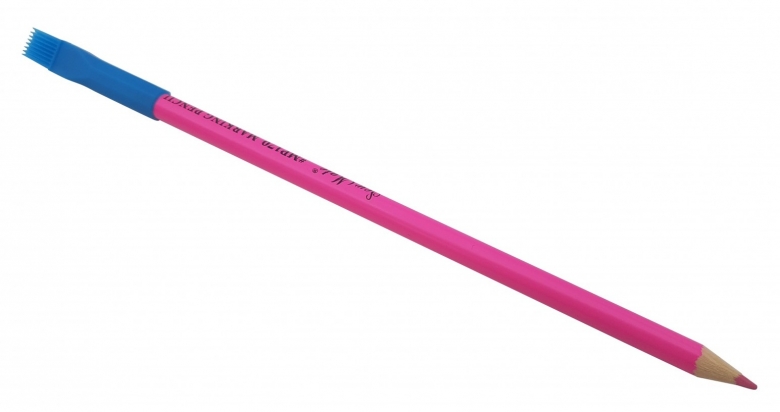
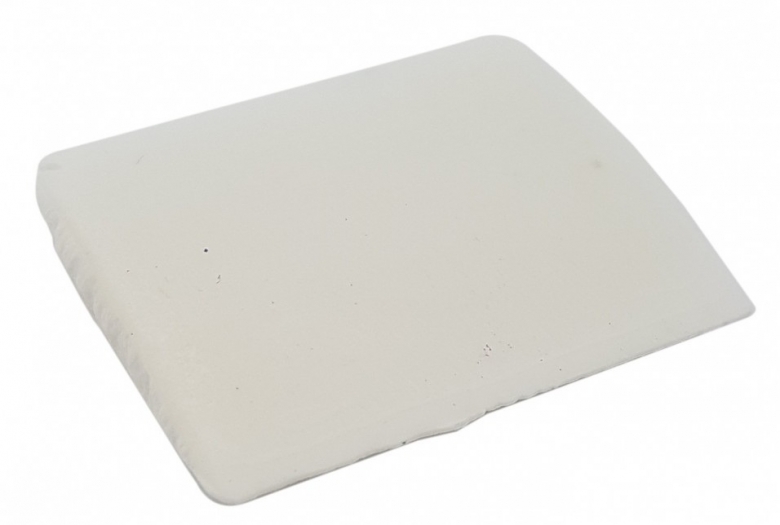
To properly align key components that affect the appearance and quality of a garment, marking is performed—indicating the placement of darts, pleats, pockets, loops, appliqués, or topstitching lines. Various marking tools are used for this purpose, such as tailor’s chalk or chalk pencils, special disappearing markers, and other instruments.
A very convenient method is marking with small notches at the edges of pattern pieces, made during cutting. When such notches are insufficient, additional marks—dots indicating topstitching, seam, or fold lines—are placed on the wrong side of the fabric. These marks must be aligned precisely during assembly.
 |
|
We hope this article was helpful to you. Most of the discussed tools and accessories can be found in our catalog here.